
The first time Gene came home from physical therapy with a fixed cane, it lasted about a week before it ended up leaning against the wall in the bedroom, always in the way. He needed it for the walk from the car into the store, but he did not want to carry it, and it would not stay anywhere we set it down. It fell over in the coat closet. It slid off the kitchen counter. It sat in the back seat of the car, sliding around every time we turned a corner. That is the real problem with a cane, I have learned. It is not the support. It is what happens to the thing when you are not using it.
That is why I ordered the HoneyBull folding cane last spring. Months later, it is the cane that lives in the trunk of our sedan, the one Gene grabs for longer walks, and the one I borrow on days when my hip reminds me it is there. This is not a quick first impression written after a week of testing. This is what months of daily use in a one-story house outside Columbus, Ohio, looks like, with all the small annoyances included.
The Quick Verdict
A folding cane that stands on its own when you set it down, and folds small enough to live in the car. It is not the stiffest cane for heavy support, but for everyday mobility it has earned its place in our house.
Amazon Check Today's Price →A cane that stays put when you set it down
After months of daily use, the HoneyBull folding cane is the one we reach for. It folds small enough for the car and stands on its own at the table, in the kitchen, and in the trunk.
Amazon Check Today's Price on Amazon →How I've Used It
I am not the person who needs a cane every day. I am 71, I have mild arthritis in both knees and one hip, and most afternoons I walk the neighbourhood without any help. But my husband Gene is 76, and two years ago he had a knee replacement. He uses a cane for anything past about ten minutes of walking, and he used a fixed cane for the first year after his surgery. I watched him struggle with that fixed cane long enough to know exactly what we needed in the next one.
The HoneyBull came into our house last spring for a specific reason. We were driving to visit family, and Gene did not want to check a cane at the airport or wrestle a fixed one into the car. The folding cane fit in the trunk, and it has stayed there ever since. I have also used it myself on days when my hip acts up, and I have carried it to restaurants and church socials where a cane leaning against a table becomes a trip hazard. It has been to the garden center, the pharmacy, and the doctor's office with us.
The routine settled in quickly. The cane lives in the trunk during the week, and it comes inside on weekends. Gene takes it to the garden center and the hardware store. I take it to the farmers market on Saturdays. It has become one of those things we simply have, like the umbrella in the hall closet, and that is exactly what I wanted.
Over the months I have tested it the way I test everything in our house. I use it, I watch Gene use it, and I pay attention to the small annoyances. The ones I found are in the cons list below, because there are always a few.
Why Folding Beats a Fixed Cane
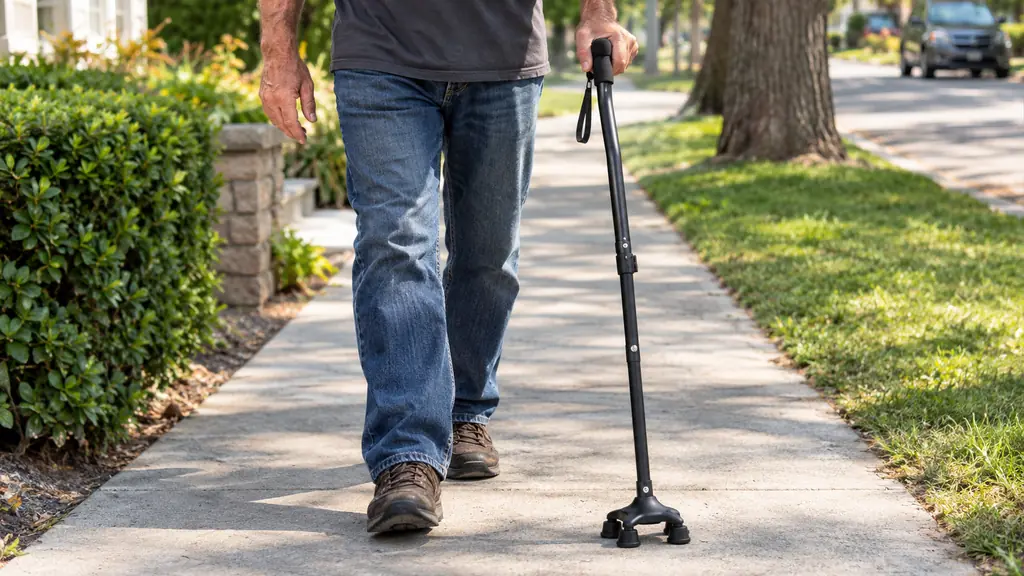
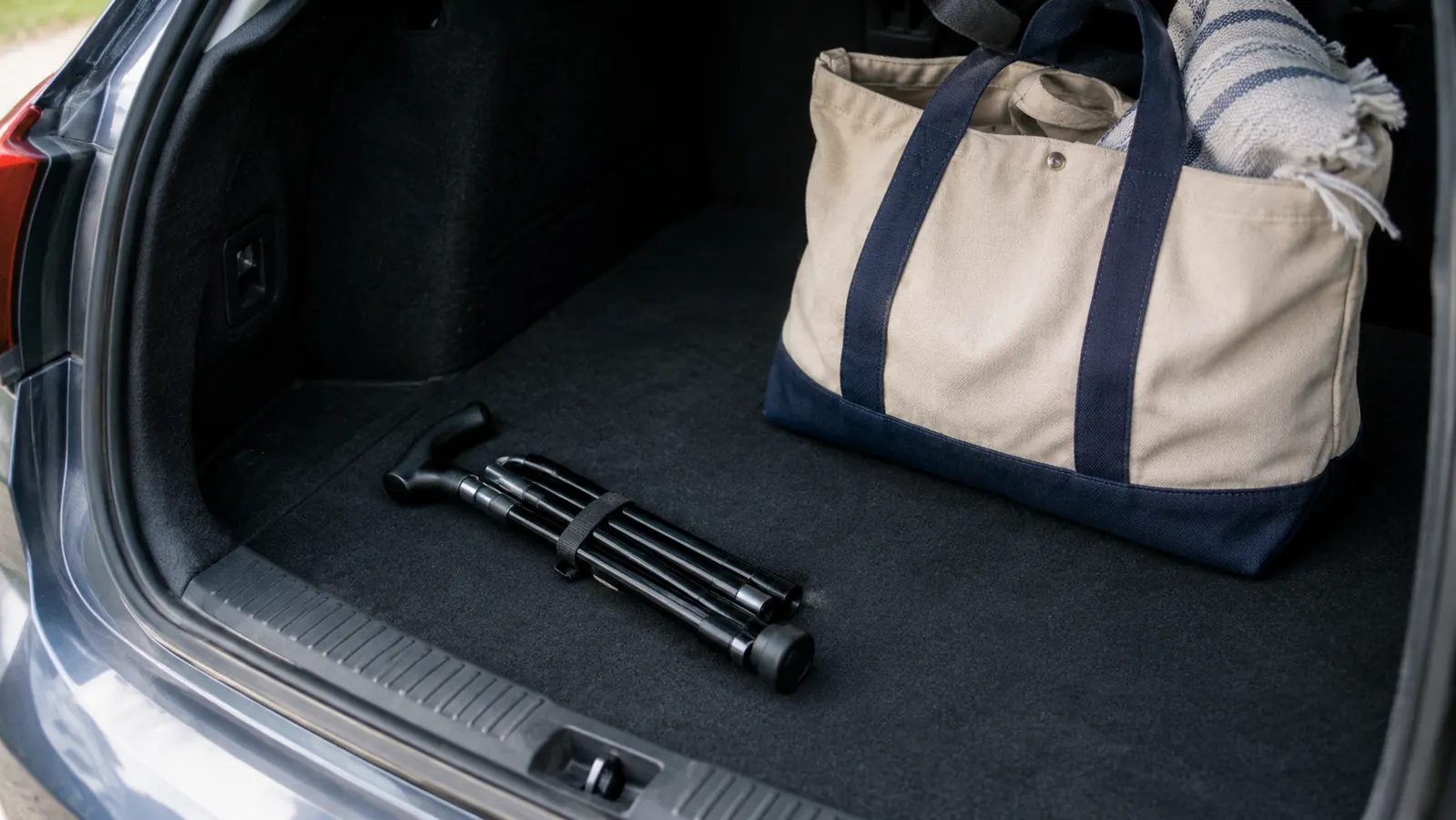
The whole point of this cane is that it folds. The shaft comes apart into sections, and the whole thing collapses down to about a foot long. That changes where a cane can live. Ours lives in the trunk of our mid-size sedan, which means it is always there when we need it, even on days we did not plan to need it. We do not have to remember to bring it, because it is already in the car. That alone has saved us more than one trip back to the house.
That matters more than it sounds. With a fixed cane, bringing it along is a whole production. You carry it into the store, hold it while you shop, and figure out what to do with it in the car. With the HoneyBull, Gene slides it into a tote or leaves it in the trunk. The cane is there when the knees are not, and it does not ask for anything in return.
It also folds small enough to fit in a large purse or a small backpack, which is how I took it on a weekend trip. I did not have to check it, and I did not have to carry it through the airport. It went in my bag and came out when I needed it. For anyone who travels, that is the difference between bringing a cane and leaving it at home.
I should say that folding and unfolding the cane is not something you do constantly. Most days it stays assembled, standing in the kitchen or lying in the trunk. The fold is for the car, the airport, and the closet. That is the right balance for us.
The Freestanding Base
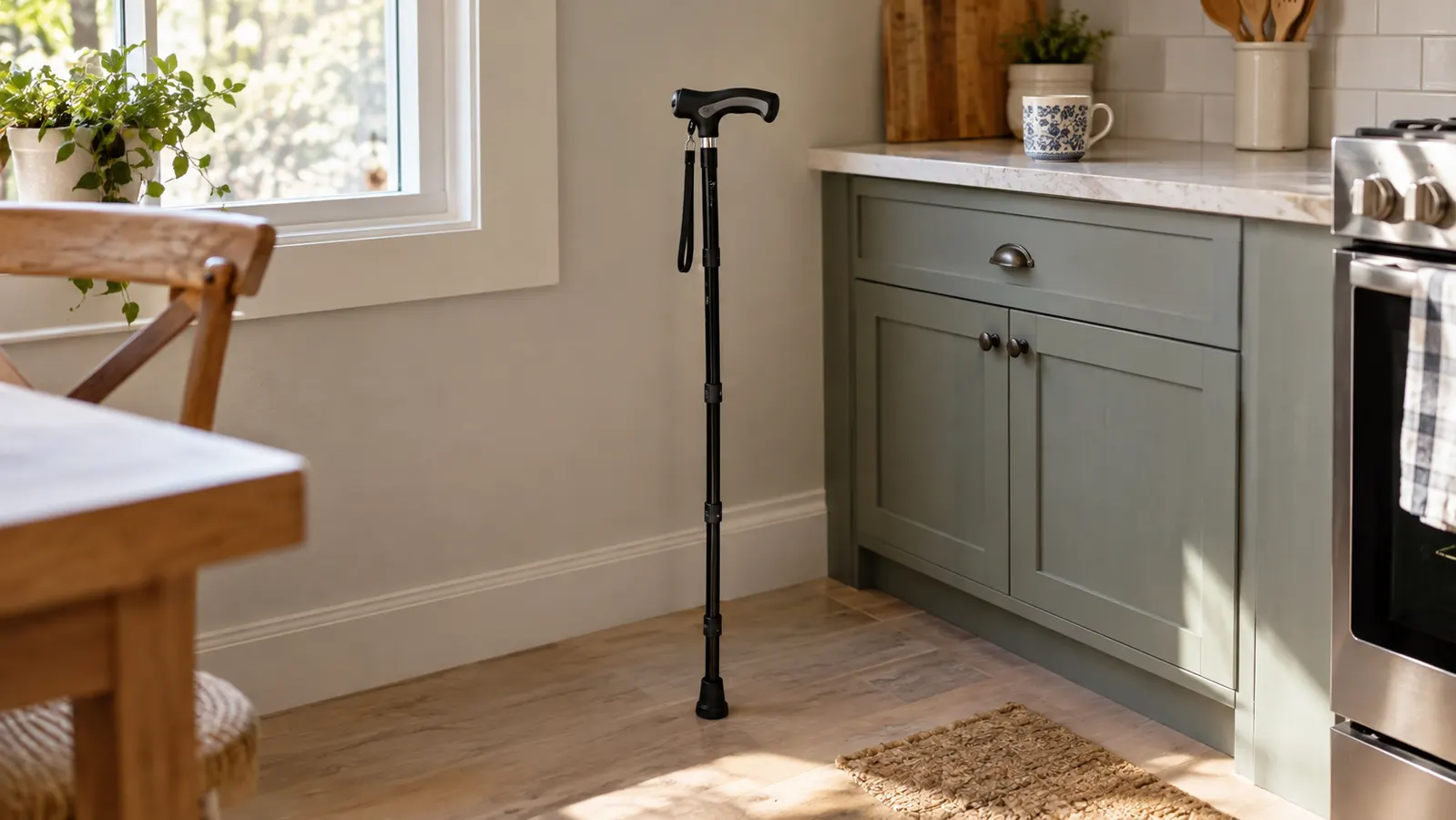
The feature that sold me is the base. This cane stands up on its own. You set it down and it stays standing, instead of rolling or falling over the way a round-tipped cane does. I did not think I cared about that until I lived with a cane that would not stay put.
In our house this is huge. Gene's old fixed cane lived on the floor next to his chair, and every time one of us walked past, we kicked it. The HoneyBull stands in the corner of the kitchen, and it stays where we put it. At restaurants, it leans against the table and does not slide. At church, it stands next to the pew. At the doctor's office, it stands beside the chair instead of falling under it.
One thing I tested on purpose was whether it would stand on the laminate floor in our kitchen and the carpet in our bedroom. It does both. I have also set it on the concrete floor of the garage, and it stood there too. I mention this because a cane that only stands on one kind of floor would be far less useful.
I will be honest that the freestanding base is not magic. On carpet it stands fine. On a smooth floor it stands fine too, but if the cane is bumped hard it can tip, same as anything. It is just that a cane that stands on its own is far less likely to end up on the floor than one with a round tip, and far less likely to trip someone walking past.
Build Quality, Weight, and the Handle
The HoneyBull is light. I have not weighed it, but I can carry it in a tote without noticing. The shaft feels solid, and the folding joints are tight. After months of Gene leaning on it for his daily walks, nothing has loosened, and the locking mechanism still clicks into place every time. That was my biggest worry about a folding cane, that the joints would wear out. So far, they have not.
The handle is where I was most worried, because a hard plastic handle hurts my hand after a while. This one has a comfortable grip that is not too soft and not too hard. Gene, who has larger hands than I do, says it fits him fine, and the height adjusts to suit both of us. That is the other thing I appreciate. It adjusts, so we do not need two canes, and neither of us has to hunch over a cane set to the wrong height.
The height adjustment is simple. There is a release, you slide the shaft to the right height, and it locks back. We set it once for Gene and once for me, and we have not touched it since. I like that it does not need tools.
The tip on the bottom has held up well on concrete, laminate, and the three steps up to our front porch. I expected to replace it by now, and I have not had to. The tip is the part I would watch first on any cane, because that is what keeps you from sliding, and this one is wearing slowly.
What I'd Change
No product is perfect, and this cane has two things I would mention before you buy. First, because the shaft folds into sections, it is not quite as rigid as a solid one-piece cane. For Gene, who puts a fair amount of weight on a cane, there is a tiny bit of flex in the joints. It has never felt unsafe, and I would not call it flimsy, but if you need a cane for very heavy support, a fixed cane or a quad cane will be stiffer, and that stiffness matters.
Second, the folding mechanism takes a little practice. You release the sections at a joint, and the first few times, it is fiddly. Gene got the hang of it quickly, but I would not hand this to someone with very limited hand strength without practicing the fold first. If arthritis in the hands is your main problem, try the mechanism before you buy.
And one small thing. Because it is designed to stand on its own, the base is a little wider than a standard cane tip. It is not bulky, but it is not invisible. You notice it when you look at the bottom of the cane, and it makes the cane a little harder to slide into a narrow bag. Neither has been a problem for us, but they are worth knowing about.
Alternatives We Considered
Before settling on the HoneyBull, I looked at quad canes, which have four small feet and stand very securely. They are genuinely more stable, and if Gene needed support for every step, that is what we would have bought. But they do not fold, and they are heavier to carry. For our situation, which is a cane for longer walks and trips, the folding HoneyBull made more sense. I would still recommend a quad cane to anyone who needs that extra stability.
I also looked at fixed wooden canes, which are lovely and sturdy but do not fold and do not stand on their own. And I looked at other folding canes. The HoneyBull stood out because of the freestanding base and the height adjustment. We have been happy with the choice, and I have told more than one neighbour about it when they asked what Gene was carrying.
If you are comparing canes yourself, I would say the two questions that matter most are simple. How often will you actually carry it, and how much weight will you put on it? Answer those two honestly and the right cane becomes obvious.
What I Liked
- Folds small enough for a trunk, a tote, or a suitcase
- Stands on its own when you set it down
- Height adjusts to fit both Gene and me
- Light enough to carry without thinking about it
- Comfortable grip for longer walks
- Locking joints have stayed solid after months of daily use
Where It Falls Short
- Slightly less rigid than a one-piece cane under heavier weight
- Folding and unfolding takes practice at first
- Freestanding base is a little wider than a standard tip
- Not the right choice if you need maximum support with every step
After months of daily use, the HoneyBull still clicks into place every time, and it has never once ended up on the floor where one of us could trip over it.
Who This Is For
This cane is for someone who needs support some of the time, not all of the time. It is for the person who walks fine at home but wants a hand on longer walks, at the store, or on uneven ground. It is for the traveler who does not want to check a cane at the airport. It is for anyone tired of their cane falling over and becoming a trip hazard. If you live in a one-story house like ours, with no stairs to worry about, a folding cane covers most of what you need.
If that sounds like you or someone you love, this is a cane I would recommend without hesitation. Check with your doctor or physical therapist first, especially if you are choosing a cane after a fall or surgery. That is the advice I give everyone, and it is the advice I would give my own family.
Who Should Skip It
If you need a cane for every single step, or if you put a lot of weight on a cane for balance, this is probably not the one. A quad cane or a fixed cane will give you more rigidity. And if you have very limited hand strength, the folding mechanism might frustrate you. There are canes designed for those situations, and they are better at them.
This is also not a medical device for serious balance conditions. It is a walking aid for everyday mobility, and it is honest about that. For us, that is exactly what we needed. For someone with different needs, there are better tools, and I would tell you to look at those first before you spend money on this one.
The cane we reach for, months later
The HoneyBull folding cane has earned its spot in our trunk and our kitchen corner. If you are weighing a folding cane, this is the one we would buy again.
Amazon Check Today's Price on Amazon →