
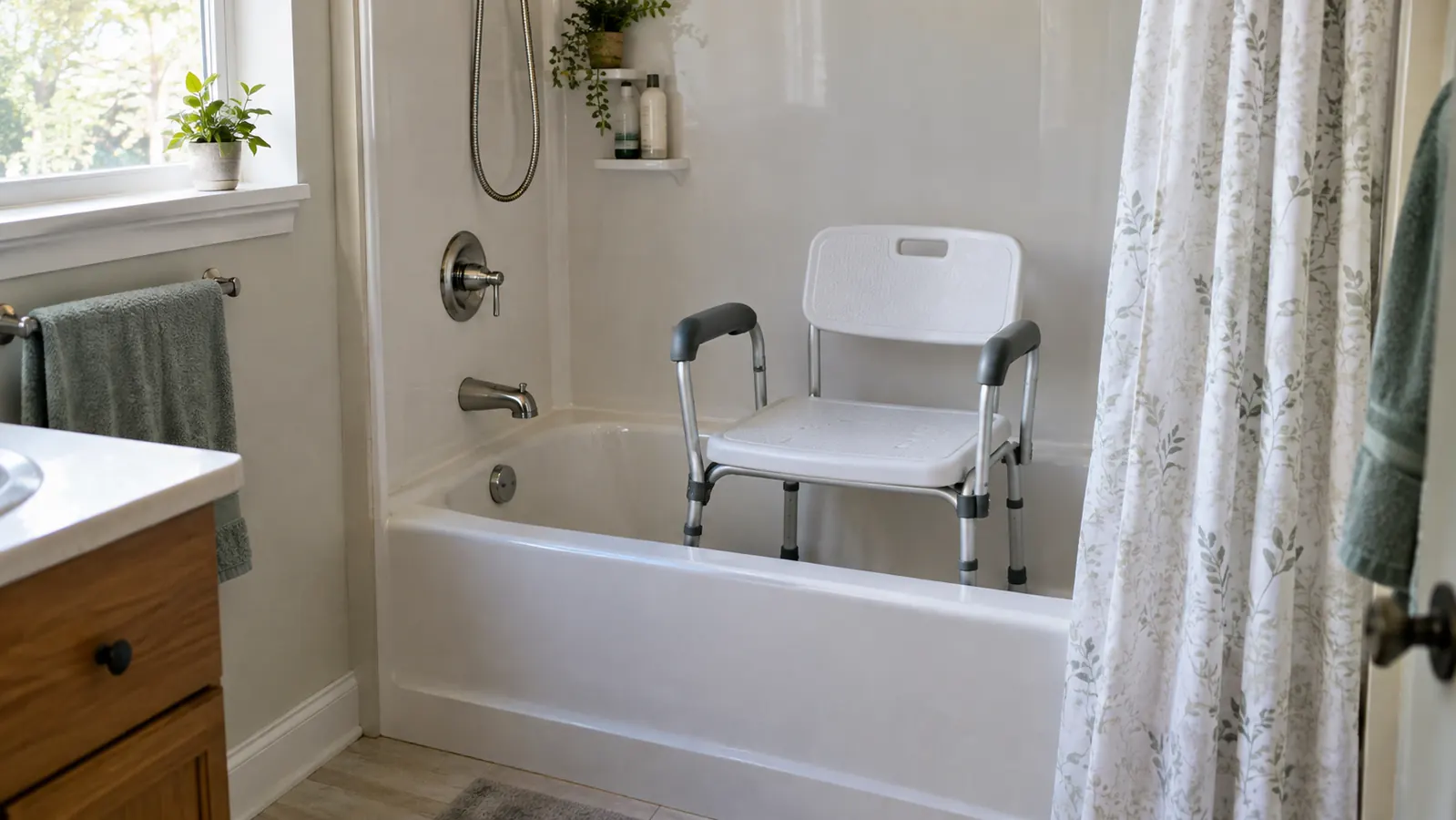
If you are trying to decide between a Medline shower chair and a transfer bench, you are really asking one question: how much of your weight can you put on one leg while you get into the tub? I asked myself that same question about two years ago, when Gene came home after his knee replacement. Our bathroom is a standard tub-shower combo: the tub is about 60 inches long and 30 inches wide, with a 14-inch wall you have to step over. We had a grab bar on the back wall, a plastic stool we had owned for years, and a whole lot of worry about how Gene was going to bathe without me hovering over him. The first time he tried the plastic stool, he wobbled getting in, and I caught him by the elbow. That was the moment I started looking for something with armrests and a back. I ordered the Medline shower chair first, used it with him for two months, then borrowed a transfer bench from a neighbor to compare. This is the honest rundown of how they actually differ. I have also included the measurements and the small failures, because those are the details I wanted before I ordered anything. No two bathrooms are the same, and no two recoveries are either.
The short answer: if you can stand on one leg long enough to step over the tub wall, turn around, and lower yourself onto a seat, a transfer bench gives you a wider, more stable seat and makes it easier for a caregiver to help. If you need to sit down before you lift your legs over the tub edge, the Medline shower chair is the safer choice because it sits fully inside the tub. Neither is better in every situation, and I do not think you should buy either one without first doing two things. Measure your tub and your floor space, and be honest about who will be in the bathroom with you. For us, the decision came down to a simple test. Gene could stand on his good leg for about ten seconds without grabbing anything, but he did not trust himself to turn around on one leg. That meant the transfer bench was tempting but risky. The Medline chair let him sit first, then swing his legs over one at a time, and that small change made his whole shower calmer. If your balance is better than his, or if you have a walk-in shower with no wall to step over, the transfer bench may be the better fit. The right one depends on your balance, your bathroom, and whether someone else will be helping you.
| Medline Shower Chair | Transfer Bench | |
|---|---|---|
| Getting in | You sit down inside the tub first, then lift your legs over the edge. Best when standing on one leg is hard. | You sit on the outside half, slide across, then lift your legs over. Requires standing on one leg briefly. |
| Seat | Padded seat with armrests and a backrest. Good support for sitting upright. | Wider, longer seat with no back on many models. Easier to slide across, less back support. |
| Caregiver help | Caregiver stands outside the tub and helps from the front. Awkward for reaching the back. | Caregiver stands beside the outside half and can help you slide across. Much easier for a second person. |
| Stability | Four legs inside the tub with suction tips. Solid once you are seated. | Two legs inside, two outside. Very stable during the transfer because the seat is anchored on both surfaces. |
| Bathroom fit | Needs enough room inside the tub for the whole chair. Works in most tub-shower combos. | Needs clear floor space outside the tub for the outside legs. Tight in small bathrooms. |
| Best for | People who need to sit before lifting their legs, or who want back and arm support while washing. | People with decent balance in one leg who want an easier transfer and a wider seat. |
Where the Medline Shower Chair Wins
The Medline shower chair is the one I reach for when balance is the problem. It has a padded seat, two padded armrests, and a full backrest, so once Gene was seated he felt held. He has never been a small man, and the 350-pound capacity gave us room to breathe. The adjustable legs let us set the seat height so his feet sat flat on the tub floor, which mattered more than I expected. When your knees are at the right angle, you are not gripping the armrests just to keep from sliding forward. The first time I set it up, I had the seat too high, about an inch and a half above where it should have been, and Gene had to hike himself up onto it. He managed, but he said his hip felt like it was doing all the work. I lowered all four legs by one notch, and the difference was immediate. His feet were flat, his knees were bent at a comfortable angle, and he stopped using the armrests to brace and started using them to wash. That was the day I stopped worrying about whether the chair would work. The next morning, a Thursday, Gene showered on his own for the first time since the surgery. He took his time, maybe twenty minutes, but he came out with his hair washed and a small grin. I stayed in the hallway and listened. The only sound was the water, and that was exactly what I wanted to hear.
It also wins on pure simplicity. There is no moving part to get wrong. You place the chair in the tub, check that the suction tips are down, and it stays put. For a person who needs to sit down before lifting their legs over the tub wall, this is the safer pattern, because you never balance on one leg with your back to the room. Gene could sit, then swing his legs in one at a time, then stand again with the armrests to turn for the shower. That sequence felt calm, and calm is worth a lot when you are afraid of falling. I remember one Tuesday about two weeks in, Gene decided he did not need the chair anymore. He tried to step over the tub wall the old way, one hand on the grab bar, and he froze halfway. I was in the hallway and heard him call my name. Nothing bad happened, but it shook both of us. He used the chair every single shower after that, and the only time we skipped it was the week we stayed with old friends and used their walk-in shower instead. That week reminded me the chair is built for a tub. In their walk-in shower, it would have been in the way. Once a week I lift it out, rinse the seat and legs, and set it on the bath mat to dry. The frame never wobbled, and the suction tips held firm. For a tub-shower combo like ours, the Medline chair is the piece of equipment that made bathing feel boring again, and boring is exactly what you want after a surgery.
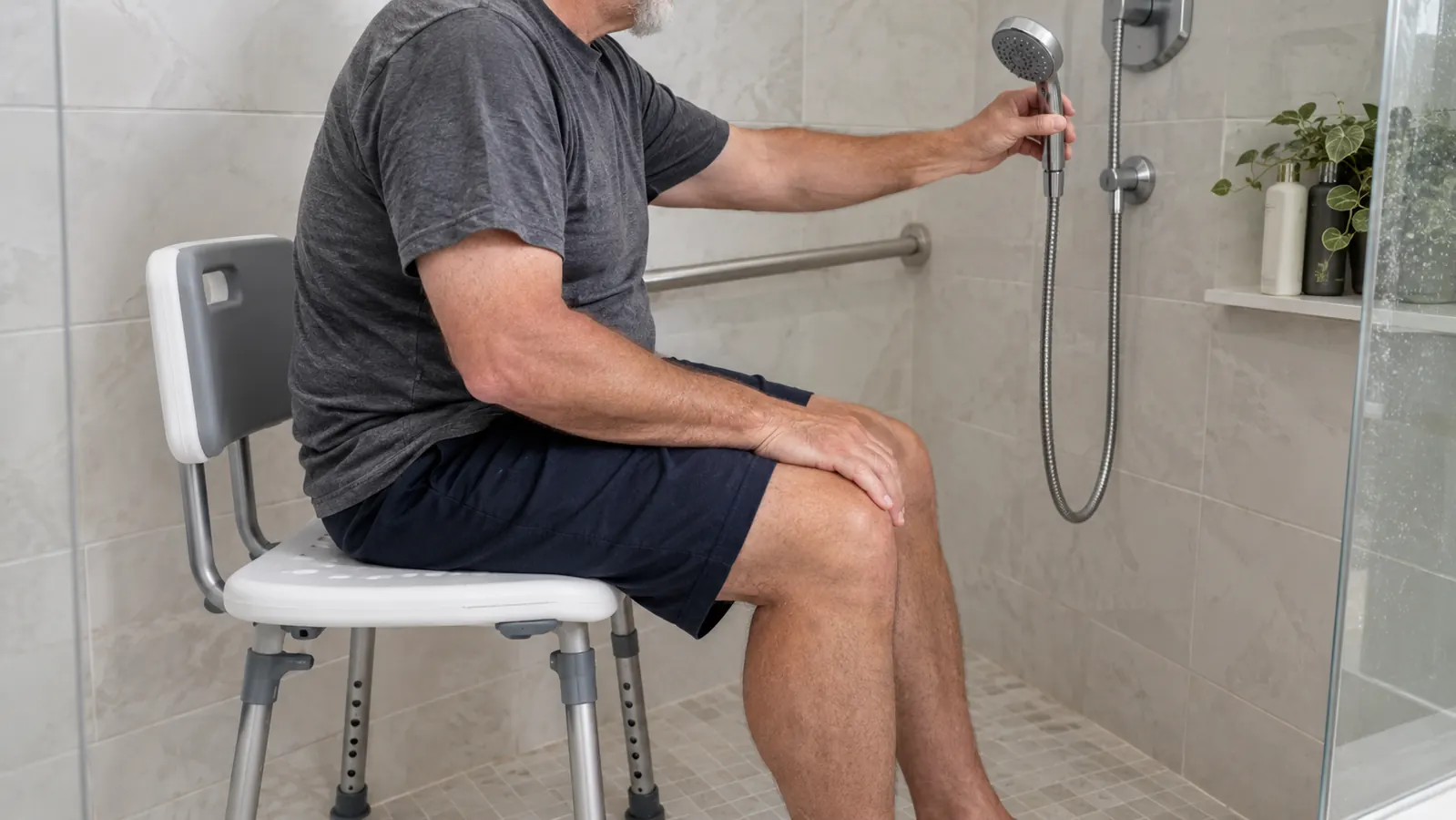
Where the Transfer Bench Wins
I did not want to like the transfer bench. It is wider, it takes up more floor space, and honestly it looks like a piece of medical equipment that wandered into the bathroom. Our neighbor's bench sat in our hallway for three days before I worked up the nerve to put it in the tub. When I finally did, the first thing I noticed was how much floor space it needed. The outside legs stuck out about 18 inches from the tub, which meant our bath mat had to move and the bathroom door would not open all the way. That alone almost made me send it back. But the first time Gene used it, I understood the appeal. He sat on the outside half, I stood beside him, and he slid across while I kept a hand on his shoulder. There was no moment where he was standing on one leg with nothing around him. The bench spans the tub wall, so the seat is supported by the floor outside the tub and the tub floor inside. That outside support is the whole point. Gene said it felt like sitting on a park bench compared to the chair, and for him that was a compliment. He had more room to turn, more room to wash, and he did not feel like he had to stay perfectly centered.
The transfer bench also wins for anyone who needs a second person during bathing. With the Medline chair, I had to lean over the tub to reach Gene's back, and neither of us loved that. I am 71 and my knees are not what they used to be, so bending over the tub wall while trying to hold a washcloth and keep an eye on his balance was not a good position for me either. With the bench, I could stand in the open floor space beside him, help him slide across, and stay close while he washed. The wider seat also gave him room to shift his weight without feeling like he was about to tip. The tradeoff, and it is a real one, is that the bench only works when the floor outside the tub is clear. The week we tried it, we had to move a small hamper and a towel rack hook out of the way every single day. One afternoon I set the bench up by myself and did not check that the outside legs were fully seated. Gene sat down and the bench tipped a hair to the left before I caught it. That was my mistake, not the bench's, but it taught me to press down on the outside seat before he sat, every time. It became a two-second habit. If your bathroom has the floor space for the outside legs, a transfer bench is the better tool for caregiver-assisted bathing. If it does not, all that stability does you no good when you are tripping over a hamper.
The chair that made our tub feel safe again
The Medline shower chair with padded armrests, a backrest, and adjustable height has been the steady piece of our bathroom for months. If you or someone you love needs to sit before getting their legs over the tub edge, this is the one to start with.
Amazon Check Today's Price on Amazon →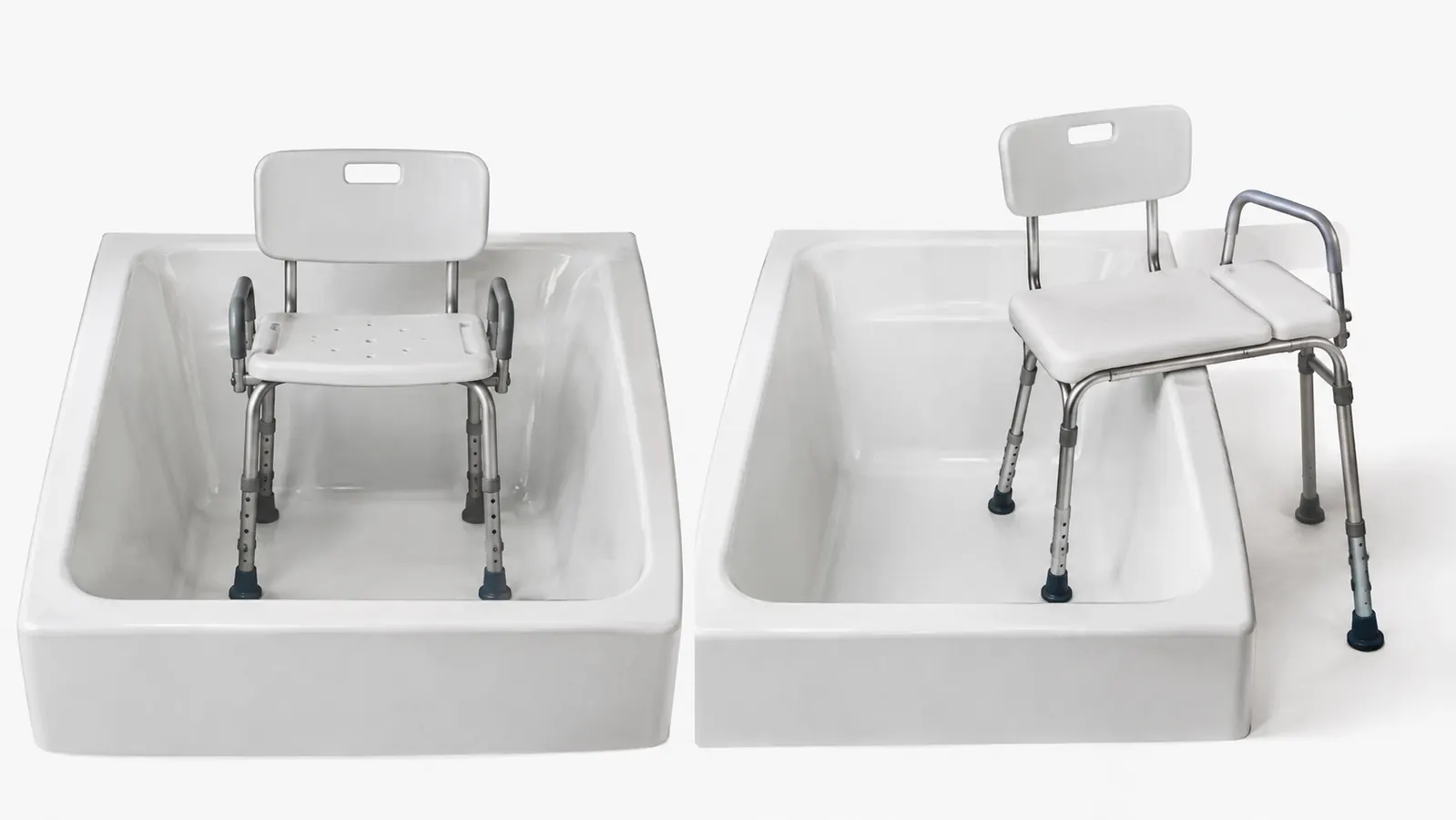
Who Should Buy Which
Buy the Medline shower chair if you need to sit before lifting your legs over the tub wall, if you want a backrest and armrests for support while washing, or if your bathroom is tight and you need something that stays fully inside the tub. It is also the better choice if you shower alone, because the chair is simpler to climb onto without help. Gene showers alone most days now, and I do not worry the way I used to. He sits, swings his legs, washes, and stands, all at his own pace. Buy a transfer bench if you have enough balance to sit on the outside half first, if a caregiver will regularly help you bathe, or if you find a wider seat more comfortable for sliding and shifting. I would also say this: if you are the caregiver doing the math in your head, think about your own back. The transfer bench lets you stand up straight while you help, and that matters more than I expected. The Medline chair is easier on the person bathing, but the bench is easier on the person helping.
Talk to your doctor or physical therapist before you choose, especially after a fall or surgery. What worked for Gene may not be right for your hip, your knee, or your bathroom layout. And measure your tub before you order anything. A transfer bench needs clear floor space outside the tub, and the Medline chair needs enough room inside for all four legs. When I measured our tub, I found the inside width was 28 inches, and the Medline chair's legs sat comfortably within that. The transfer bench needed about 18 inches of clear floor on the outside, and we had to rearrange the bathroom to make that work. We also have a walk-in shower in the second bathroom, and neither of these tools belongs there. On the flat floor, a simple shower chair is enough, because there is no wall to step over. The tub is the hard part, and that is where the Medline chair earns its place. Both are good tools. The right one is the one that fits your body and your home. If you are still unsure, see if a local medical supply store will let you try both, or ask a physical therapist to watch you practice the transfer. That is what I would tell a close friend, because I have been on both sides of this decision.
Still weighing it? Start with the Medline
If most of your showers are solo and you want back support, armrests, and a seat that stays inside the tub, the Medline shower chair is the practical first step. It worked for us, and it may be all you need.
Amazon Check Today's Price on Amazon →