
After my husband Gene had his knee replaced two winters ago, our hallway turned into a decision point. On the third morning home from the hospital, I found him at the bedroom door, one hand on the frame, trying to decide whether a walk to the kitchen was worth the effort. It was twelve steps from the bedroom door to the kitchen counter. He counted them once, then went back to bed. I got him a standard walker first, and it helped, but he had to lift it at every step and there was nowhere to sit when his knee complained. Then we borrowed a Drive Medical rollator from a neighbour, and the difference showed up within the first hour. He walked those same twelve steps without stopping, sat down on the seat in the kitchen, and stayed for breakfast. This list is the practical version of what I learned watching Gene use one, and what I now use myself on my unsteady days.
A rollator that keeps up with real days at home
The Drive Medical Rollator Walker with Seat has been the steady helper in our house for months. Check today's price on Amazon.
Amazon Check Today's Price on Amazon →It stands still when you stand still
A cane leans. A standard walker has to be held. A rollator stands on its own four wheels, so you can let go of the handles to open the mailbox, reach for a mug, or steady yourself while you catch your breath. That small freedom matters more than I expected. Gene uses both hands to carry a cup of coffee now, which sounds small until you have watched someone shuffle with a mug in one hand and a walker in the other. The morning it clicked for him was at the end of our front walk, three weeks after he started using it. He let go of both handles to sort the mail, and the rollator did not move an inch. He stood there a second, then said, 'Well, that is new.' Now he opens the mailbox without thinking about it, and he does not brace himself on the door frame anymore.
The seat is a rest stop that follows you
The built-in seat means you never have to choose between going further and sitting down. When Gene's knee starts to ache at the far end of the grocery store, he sits. When I feel dizzy after standing too long at the kitchen counter, I sit. The seat turns every outing into a route with built-in rest stops, and that alone has gotten us out of the house more often.
Brakes that work like bicycle brakes
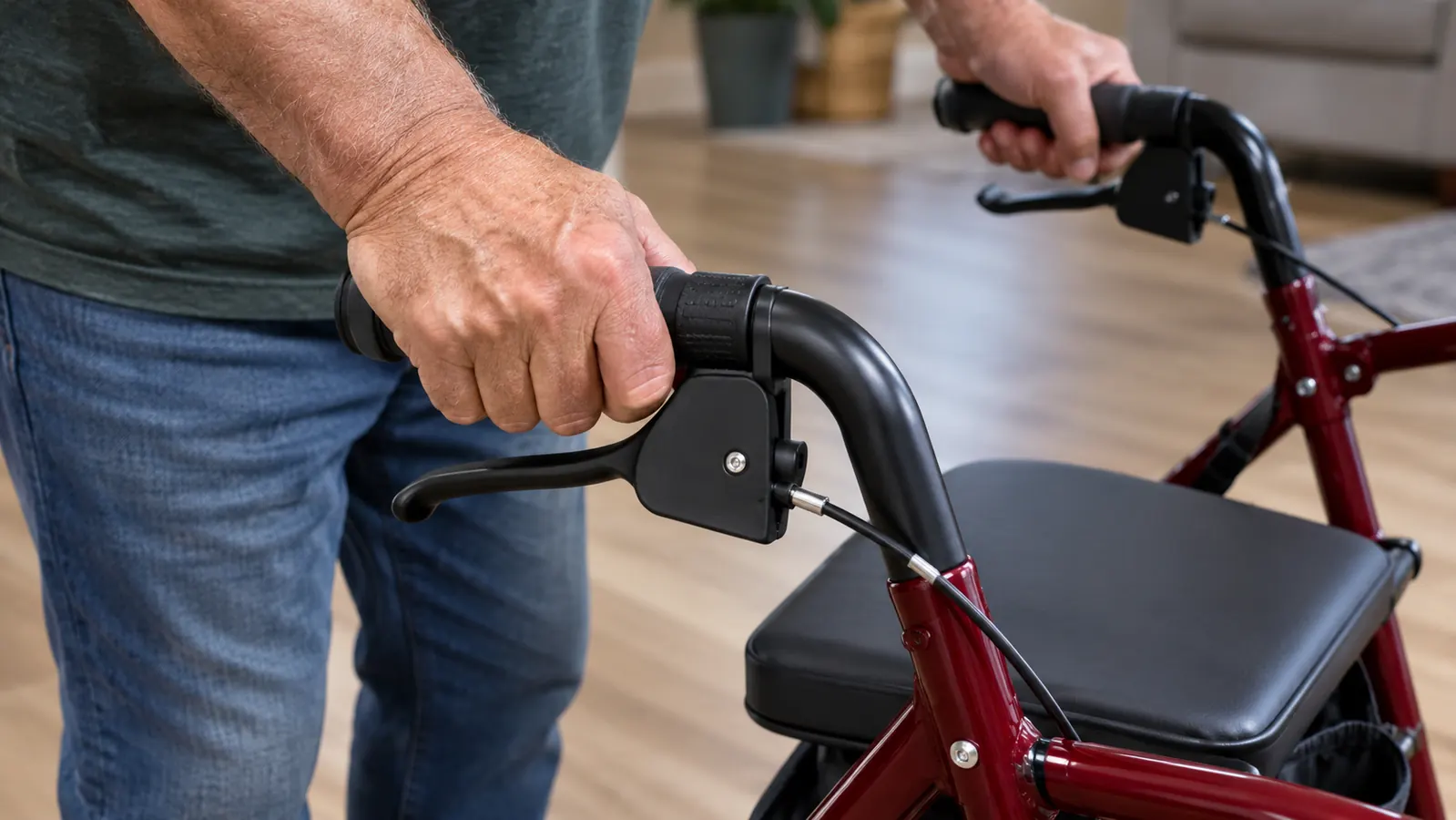
The push-down brake levers are easy to understand. Squeeze to slow down, push down to lock. Gene learned them in about a minute, and I have never seen him fumble with them. Locking the brakes makes the rollator solid enough to lower yourself onto the seat slowly, which is exactly when you need the walker to stay put.
It rolls, so you do not have to lift it
A standard walker has to be picked up and set down with every step. That motion is hard on shoulders, wrists, and balance. A rollator glides forward, so your energy goes into walking, not lifting. For Gene, whose arms were doing most of the work with the standard walker, this was the biggest change. The first afternoon with the rollator, he walked to the end of the block and back, about a quarter mile. He had not tried that in weeks. When he came in, his shoulders did not ache. His knee was tired, but his shoulders were fine, and that told us the standard walker had been making him work harder than the walking did. He came home less tired than he used to feel after crossing the living room.
The basket keeps your hands free
The storage pouch under the seat holds a water bottle, a phone, a small wallet, and a paperback. That means no bags swinging from your wrist while you walk. I keep a small notebook in mine for my grocery list. Gene keeps his reading glasses in his. It is a small thing that makes the rollator feel like a useful companion instead of a piece of medical equipment.
The wheels handle sidewalks and store floors
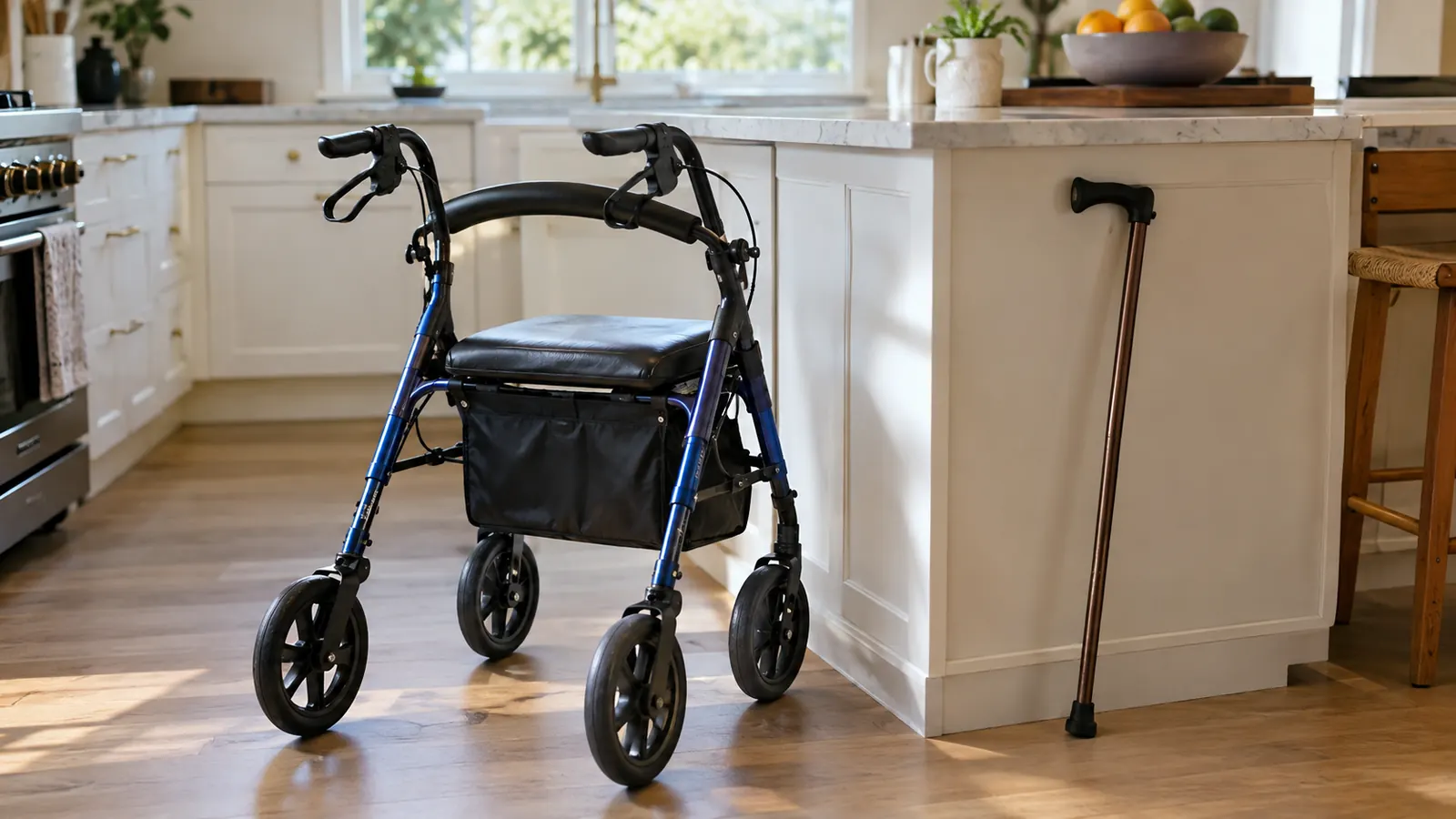
The 7.5 inch wheels roll smoothly over pavement cracks, store thresholds, and our laminate floors. There is a seam in our kitchen floor where the old laminate meets the new, and the wheels cross it without a catch. They are not meant for rough trails, but they handle the terrain of ordinary life. Gene has taken this rollator through the pharmacy, the post office, and the produce aisle without getting stuck. The post office threshold is a full inch higher than the sidewalk, and he rolls right over it. That reliability is what makes him reach for it instead of staying home.
It folds flat enough for the trunk of a sedan
We have a mid-size sedan, and the rollator folds down and fits in the trunk with room to spare. That has changed our weekends. We can drive to the park, unfold the rollator, and walk the paved loop without Gene worrying about whether he will be able to make it back to the car. The loop is three quarters of a mile, and he walks all of it now, then sits on the seat while I unlock the car. The first time we tried folding it, out in the driveway, we fumbled with the latch for a good five minutes. Now Gene can fold it and put it in the trunk in under a minute. The folding mechanism takes a few tries to learn, but it becomes second nature quickly.
It keeps your posture more upright
With a standard walker, people tend to hunch forward over the bar. With a rollator, you stand more naturally and push it ahead of you. Better posture means better breathing and less strain on the lower back. I noticed this right away with Gene, who stands taller with the rollator than he ever did with the walker.
It gives you confidence on uneven ground
The fear of falling is real, and it keeps people inside. Knowing the rollator has four points of contact with the ground, plus brakes you can lock, gives a feeling of security that a cane cannot match. Gene walks on the grass at the edge of the park now, something he would not try with the standard walker. Confidence is a practical feature, not a luxury.
It is built for daily use
The frame feels solid, the seat holds firm, and the wheels have held up through months of daily use. Drive Medical is a brand we recognized from the pharmacy, and this rollator has lived up to that reputation. It is not a flimsy piece of equipment. It is a tool you can rely on when you need it most.
What I'd Skip
If you are looking for something to carry up and down stairs easily, or if you need a walker that fits through very narrow doorways, a rollator might not be the right choice. It is heavier than a standard walker, and it is not designed for hiking or rough terrain. Also, if you have been told by a doctor or physical therapist to use a specific type of walker for your recovery, follow that advice first. This rollator is a great everyday helper, but it is not a replacement for professional guidance.
The seat turns every outing into a route with built-in rest stops, and that alone has gotten us out of the house more often.
Steady days start with the right support
The Drive Medical Rollator Walker with Seat has been a steady presence in our home. Check today's price on Amazon and see if it fits your routine.
Amazon Check Today's Price on Amazon →