

When Gene came home from his knee replacement two years ago, the physical therapist handed him a standard walker and told him to use it until he did not need it. The therapist's exact words were, "Use it every time you stand up, no exceptions." Gene followed that for six weeks, then parked it in the garage. I did not blame him. He was steady enough inside, but the small wheels caught on the crack in the concrete at the end of our walk, and the three steps up to the front porch were a daily struggle. By the time he needed help on longer walks, I was the one doing the research. I am Lorraine Pettibone, 71, and I spent the past month comparing the Drive Medical rollator with a seat against the plain walker we already owned. This is what I learned from our own living room, hallway, and sidewalk.
If you only need support for a few steps between the bed and the bathroom, a standard walker is hard to beat. If you want to walk the block, stop to rest, carry something from the kitchen, or keep up with a grandchild, the rollator is the better tool. The short answer: most people who plan to leave the house will be happier with a rollator. But the right choice depends on your balance, your grip strength, and where you walk. There is no single answer that fits everyone.
Before I go any further, I want to be clear about my place in all this. I am not a doctor or a physical therapist. I am a retired school librarian who has spent a lot of time helping my husband and my mother-in-law figure out mobility aids. What follows is what worked in our house. Your situation may be different, so please check with your own doctor or therapist before you buy anything.
| Drive Medical Rollator | Standard Walker | |
|---|---|---|
| Best for | Longer walks, rests, carrying things | Short trips around the house |
| Weight | Noticeably heavier to lift | Light and easy to lift |
| Seat | Built-in seat for resting anytime | No seat |
| Storage | Room to hang a small bag on the frame | Nothing built in |
| Brakes | Hand brakes that lock | No brakes on most basic models |
| Tight spaces | Wider, needs room to turn | Narrow, fits small hallways |
| Outdoors | 7.5-inch wheels handle cracks | Small wheels catch on uneven ground |
| Carpet | Rolls over low carpet | Can drag on carpet |
| Very unsteady users | Needs grip to control brakes | Stable frame to lean on |
| Cost | Usually more expensive | Usually less expensive |
Where the Drive Medical Rollator Wins
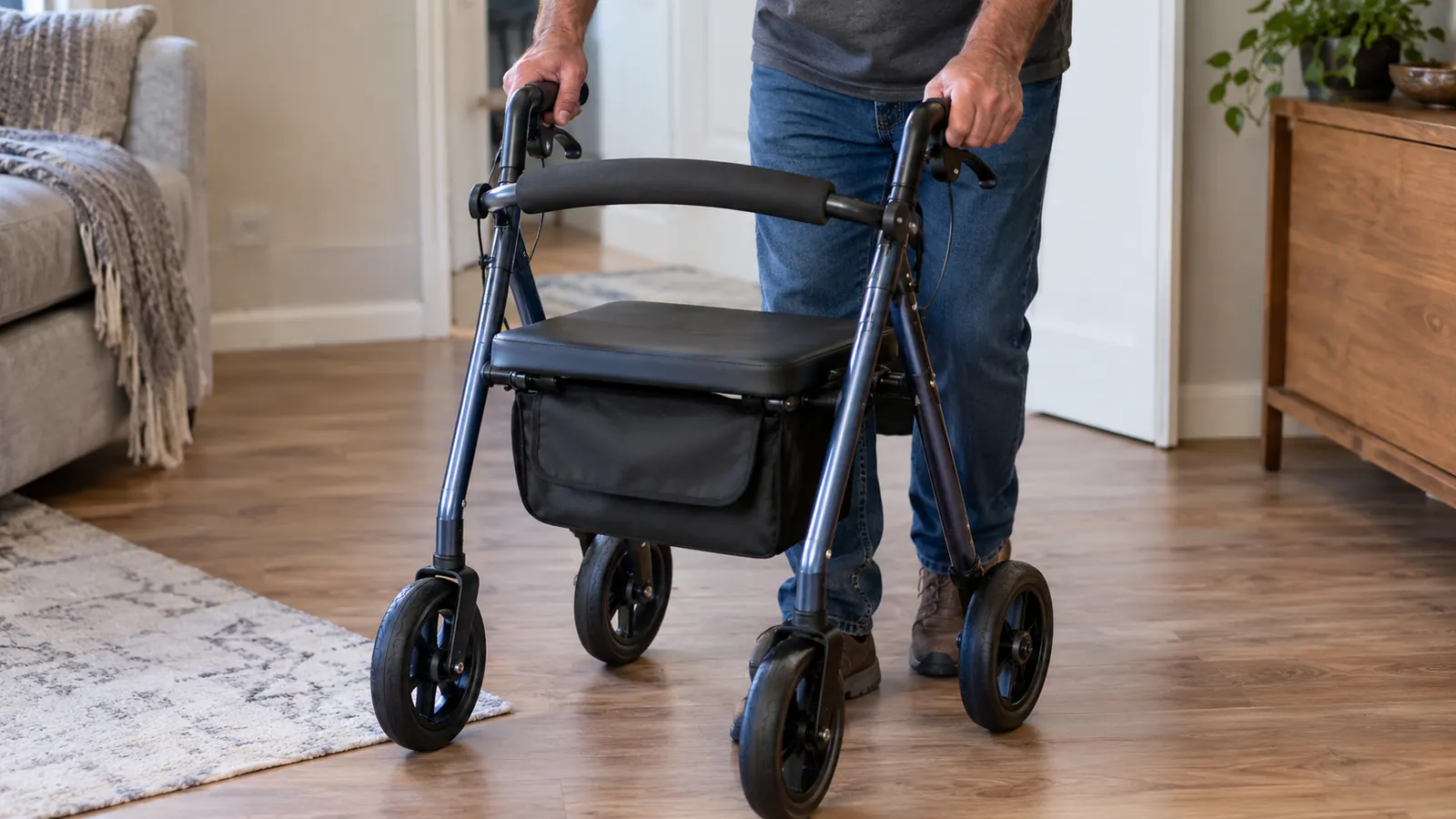
The biggest difference is the seat. Gene and I walk to the end of our street and back most afternoons. With the standard walker, he had to lean against the mailbox to catch his breath. With the rollator, he just lowers himself onto the seat. Last Tuesday was the clearest example. We made it to the end of the street, he sat for two full minutes in the shade, and then he walked home without asking to turn back early. That built-in seat changes everything. It turns a short walk into something he can do even on days when his knee aches. It also gives me a place to sit while he chats with a neighbour. I did not expect a seat to matter that much, but it does.
The second difference is how it rolls. The 7.5-inch wheels move over the crack in the concrete and the gravel near the curb without snagging. The standard walker's small wheels catch on every little bump. The locking hand brakes mean the rollator stays put when Gene sits down, and they give him a way to slow down on the gentle slope in front of the house. For anyone who wants to leave the house, those two things, the seat and the wheels, matter more than I expected.
The rollator also gives you a free hand. There is room to hang a small bag on the frame, so Gene can carry a water bottle, his reading glasses, and the house keys without holding anything. With the standard walker, he had to stop and put things down every time he needed both hands. That sounds like a small thing, but it changes how often you are willing to go out.
Where the Standard Walker Wins
I do not want to talk you out of a standard walker, because it has real strengths. It is lighter and narrower, and it is easier to lift into the trunk of our sedan. It folds flat with one hand. I measured both frames the other day: the walker is about 24 inches wide at the base, and the rollator is a good six inches wider at the wheels. In our hallway, which is only about three feet wide, the walker turns around without touching the walls. The rollator needs more room and a little planning to turn around in tight spaces. If you live in a small apartment or spend most of your time indoors, that difference matters.
The standard walker is also the better choice for someone who needs to lean heavily on the frame. My mother-in-law used one after her hip surgery because she could put her full weight on it without worrying about wheels moving. If your balance is very unsteady, or if a therapist tells you to use a walker for safety, listen to them. A rollator is not a substitute for that kind of support. It is a tool for people who can walk but need a rest now and then.
Cost is another place where the standard walker wins. It is usually less expensive, and for some families that is the deciding factor. I am not going to quote prices here because they change, but you can expect the basic walker to be the more budget-friendly option. If money is tight and you only need help around the house, there is no shame in choosing the simpler tool.
Take a seat mid-walk instead of turning back early
If the built-in seat and locking brakes sound like exactly what is missing from your current walker, the Drive Medical rollator is worth a closer look. Check today's price on Amazon and see if it fits your routine.
Amazon Check Today's Price on Amazon →Who Should Buy Which
Buy the Drive Medical rollator if you want to keep walking outside. That is the clearest signal. If you find yourself skipping walks because there is nowhere to sit, or if you carry a water bottle and keys and have no free hand, the rollator solves both problems at once. It is also a good fit if you have a place to store it, because it takes up more room than a folding walker.
Choose a standard walker if you mostly stay indoors and need something light to move from room to room. It is also the safer choice if you need to put weight on the frame. And if you travel often and lift your aid in and out of a car by yourself, the lighter walker is easier on your arms. Neither choice is wrong. They are tools for different jobs.
How They Handle the Places You Actually Walk
I tested both in the places we really use. In the hallway, the standard walker is easier. It is narrow enough to pass through without bumping the walls. The rollator is wider, and I had to angle it to get through the bathroom door. That is not a problem in our house, but it would be in a smaller home. Measure your doorways before you decide.
Outside is where the rollator earns its keep. Our street has a few uneven spots, and the standard walker's small wheels catch on every one. The rollator's larger wheels roll right over them. Gene can walk at a steady pace without stopping to lift the walker over a crack. The three steps up to our front porch were the real test. With the standard walker, he had to stop, fold it, climb the steps, and unfold it on the porch. With the rollator, he walks to the bottom step, tips it back onto its rear wheels, and climbs one step at a time. Neither is graceful, but the rollator does not end the walk on a sour note. That is the difference between a frustrating shuffle and a real walk.
Carpet is another story. Low-pile carpet is fine for the rollator. Thick carpet or a rug with a folded edge can catch the front wheels. The standard walker can drag on carpet, but you can lift it. Neither one is perfect on every surface, so think about the floors in your own home.
Folding, Storing, and Lifting
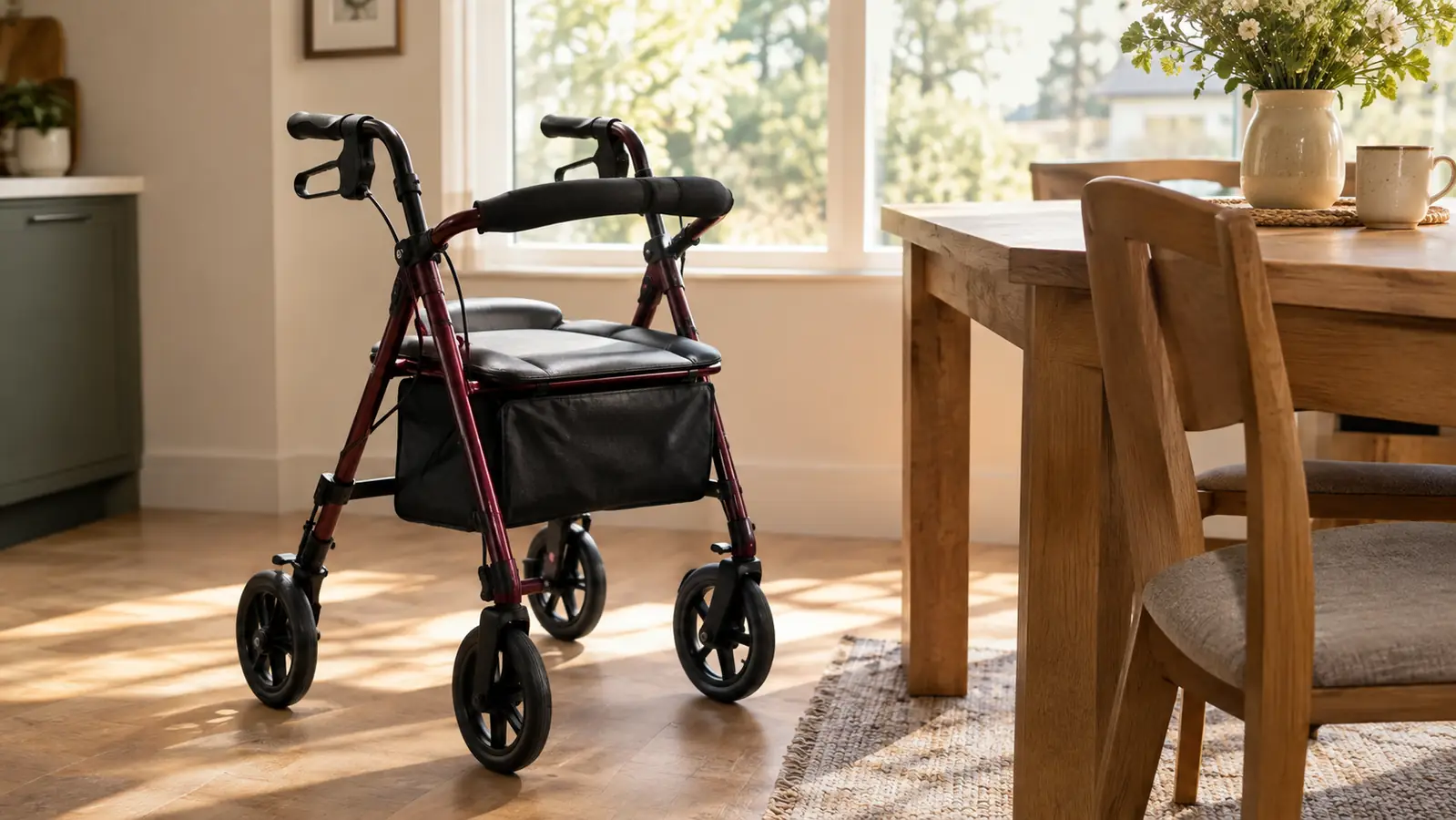
Folding is where the standard walker is clearly easier. It collapses with one hand and stands on its own. The rollator folds too, but it takes two hands and a little practice. The first few times, I had to read the instructions. Once you get the hang of it, it takes about ten seconds, but it is not as effortless as the walker.
Lifting is the bigger issue. The rollator is heavier, and you feel that weight when you put it in the trunk. Last week I loaded it into the trunk of our sedan by myself, and it took both hands, a little hip leverage, and a count of three. I managed it, but I felt it in my shoulders the next morning. I would not want to carry it up a flight of stairs. If you live in a two-story house, keep one on each floor or choose the lighter walker. If you travel often and lift your aid in and out of a car by yourself, the standard walker is kinder to your arms.
What to Measure Before You Buy
Before you order anything, take a tape measure to your doorways. The rollator is wider than a standard walker, and it needs to fit through every door you plan to use. Measure the bathroom door, the bedroom door, and the front door. Write the numbers down. Our bathroom door is 30 inches wide, and the rollator just clears it. A rollator that does not fit through your bathroom door will live in the hallway, and that is not useful.
Also measure the space where you will store it. The rollator folds, but it still takes up more room than a walker. We keep ours in the front hall closet. If you do not have a closet or a corner, think about where it will go. The standard walker can slide behind a door or under a bed, which is a real advantage in a small home.
What I'd Tell My Sister
If my sister called me tonight and asked which one to buy, I would ask her one question first: where will you use it most? If the answer is the kitchen and the hallway, get the standard walker. If the answer is the sidewalk, the park, or the grocery store, get the rollator. Most people I know want to keep going outside, so most people end up happier with the rollator.
I would also tell her to try both before buying. Walk down a hallway, sit on the seat, fold it up, put it in the car. The right choice becomes obvious once you do that. That is how Gene and I decided, by the way. He spent ten minutes walking the length of the living room with each one, and he chose the rollator before I even asked. And I would remind her to talk to her doctor or physical therapist, especially if she has had a fall. They know her balance better than any review ever will.
The Bottom Line
The Drive Medical rollator and a standard walker are not competing for the same job. The walker is a stable, lightweight helper for short distances indoors. The rollator is a rolling seat that lets you keep walking longer, rest when you need to, and carry a few things with you. For Gene and me, the rollator is the one that gets used every day.
That does not mean the standard walker is a bad tool. It is a good tool for a different situation. The honest answer is that most people who are choosing between the two are hoping to stay active, and for that, the rollator is usually the better fit. Take your time, measure your doorways, and check with your doctor. Then pick the one that gets you out the door.
Give your walks a place to rest
The Drive Medical rollator turned our afternoon walks from a chore into something Gene actually looks forward to. If that sounds like what you need, see today's price on Amazon and read the reviews from other families.
Amazon Check Today's Price on Amazon →